Silver cutlery: the number on the back matters more than the price
Silver is worth about half its January record, yet still more than a year ago. Before the price matters, the stamp on a fork or spoon decides how much silver there is at all.
Marcel Buth · Co-founder, IsItGOLD?
· 3 min read
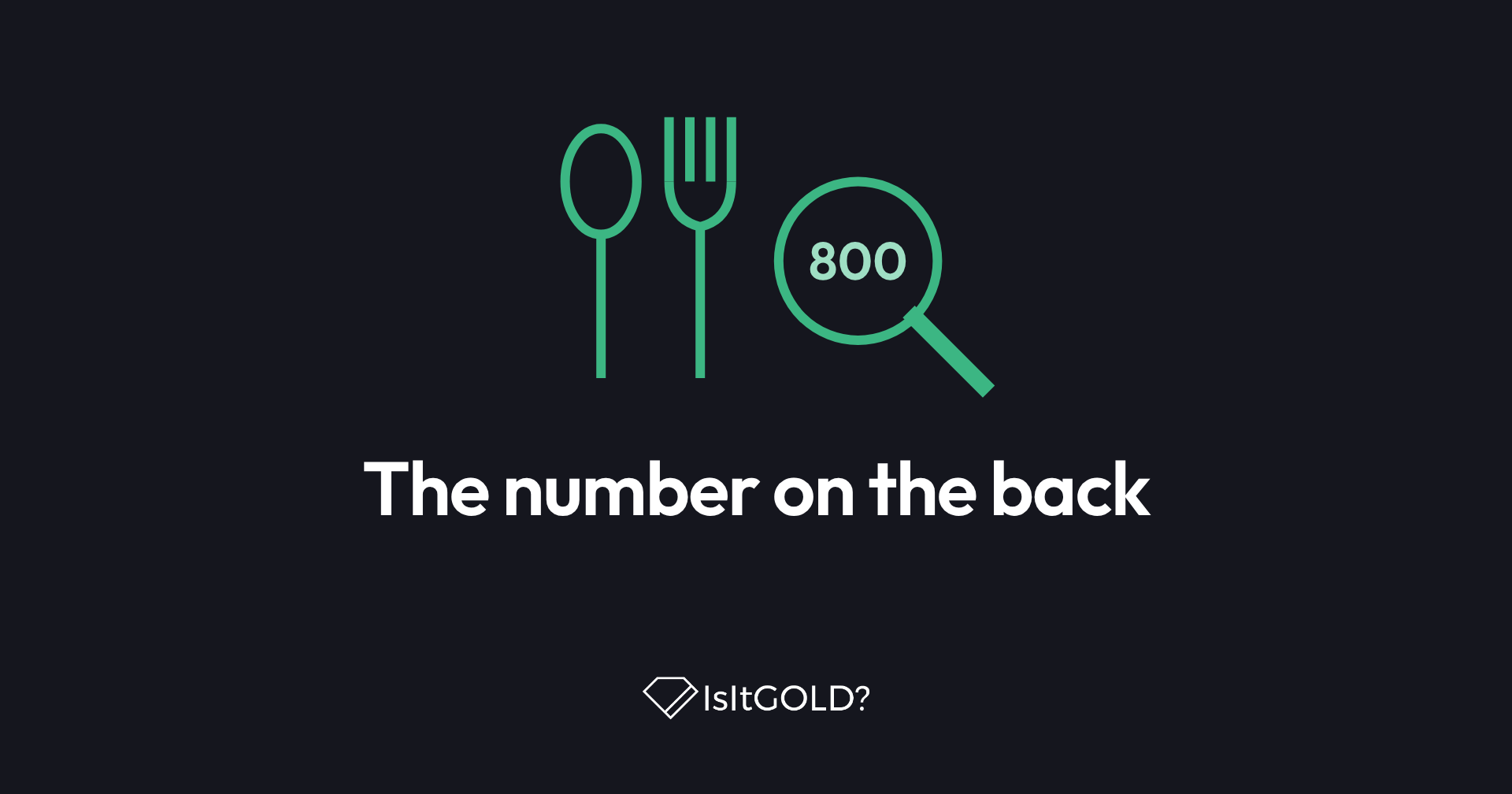
Silver has had a dramatic year. For anyone with a drawer of old cutlery, though, the price is the second question. The first is a small number stamped on the back.
Where the silver price stands
On 6 October 2026, silver traded at $61.14 per troy ounce. That is roughly half the all-time high above $121 reached on 29 January 2026, according to the Silver Institute. Over the past month the price fell by about 8%, while it is still around a quarter higher than a year ago.
We report these numbers because they change what a piece of silver is worth today. They say nothing about where the price goes next, and nothing here is advice on whether to buy, sell or hold.
Old silver is already moving
In its World Silver Survey 2026, prepared by Metals Focus and published on 15 April 2026, the Silver Institute reports that silver recycling rose 2% in 2025 to 197.6 million ounces, a twelve-year high. Jewellery and silverware were key contributors, and refinery bottlenecks limited how much could be processed.
On the other side, silverware fabrication fell 21% to a four-year low, and the institute expects double-digit declines for jewellery and silverware in 2026 as high prices weigh on demand.
What the stamp tells you
Solid silver is marked with its fineness in parts per thousand. 800 means 80% silver, 835 means 83.5%, and 925, known as sterling, means 92.5%. Under Germany's Fineness Act, a fineness may be stated on silver tableware only from 800 upwards, and the actual content may fall no more than eight thousandths below the stamp. Jewellery may be stamped at any fineness.
Plated cutlery is a different object. German pieces often carry numbers such as 90 or 100. These are not a fineness: the Fineness Act allows plated flatware to carry numbers that state the amount of fine silver deposited on the surface. In the United States, the FTC's jewelry guides likewise separate silver-plated goods from solid and sterling silver. A plated fork is mostly base metal under a thin layer of silver.
How melt value follows
The material value of solid silver comes from the same calculation as for gold: weight × fineness × spot price. Spot price per gram is the price per troy ounce divided by 31.1035. At $61.14, a gram of pure silver is worth about $1.97.
For one kilogram of cutlery:
- Stamped 800: about $1,573
- Stamped 835: about $1,641
- Stamped 925: about $1,818
- Plated, stamped 90 or 100: only the surface layer is silver, so the metal value is a small fraction of these figures
At the January peak, the same kilogram of 800 silver would have held about $3,100 worth of metal. The difference is the price move, not the cutlery.
Knives deserve a second look: many have steel blades and hollow, filled handles, so their total weight overstates the silver in them.
What the formula leaves out
Melt value is a starting point, not an offer. Buyers account for testing, refining and their own terms. Maker, design and age can make a set worth more as cutlery than as metal. And the formula depends on reading the stamp correctly: marks can be worn, foreign or forged. If a set matters to you, have it tested independently.
IsItGOLD? uses machine vision to estimate the metal and its fineness and, with the weight you add, shows an estimated value based on today's spot price.
Sources
- USAGOLD, Daily Precious Metals Market Report (6 October 2026)
- Silver Institute, World Silver Survey 2026 press release, prepared by Metals Focus (15 April 2026)
- Trading Economics, Silver (retrieved 7 October 2026, CFD price)
- Fortune, Current price of silver (6 October 2026)
- Gesetz über den Feingehalt der Gold- und Silberwaren, §§ 2, 5, 9
- FTC, 16 CFR Part 23, Guides for the Jewelry, Precious Metals, and Pewter Industries